Country
Companies10 of 15

paysera.com
Paysera
paysera.com🇱🇹 Lithuania
Paysera is a Lithuanian fintech company that has quietly built one of Europe's most comprehensive payment and banking platforms, serving millions of users across the continent. Rather than chasing hype, Paysera focuses on practical utility—combining payment processing, digital accounts, currency exchange, and invoicing tools into a single interface that works across borders and languages. The platform powers everything from freelancers managing invoices to SMEs handling payroll, while also offering consumer-facing services like multi-currency wallets and competitive exchange rates. What sets Paysera apart is its unglamorous pragmatism: it solves real friction in how Europeans move, spend, and manage money across different countries, without the startup theatrics. It's the kind of company that doesn't dominate headlines but has become indispensable infrastructure for a significant portion of the continent's digital economy. In the crowded European fintech landscape, where newer players chase consumer attention and legacy banks chase compliance, Paysera operates in the profitable middle—trusted by businesses and individuals who value reliability and cross-border simplicity over brand prestige.
Categories
Financial InfrastructurePaymentsDigital BankingSME Finance
0
upvotes
rauva.com
Rauva
rauva.com🇵🇹 Portugal
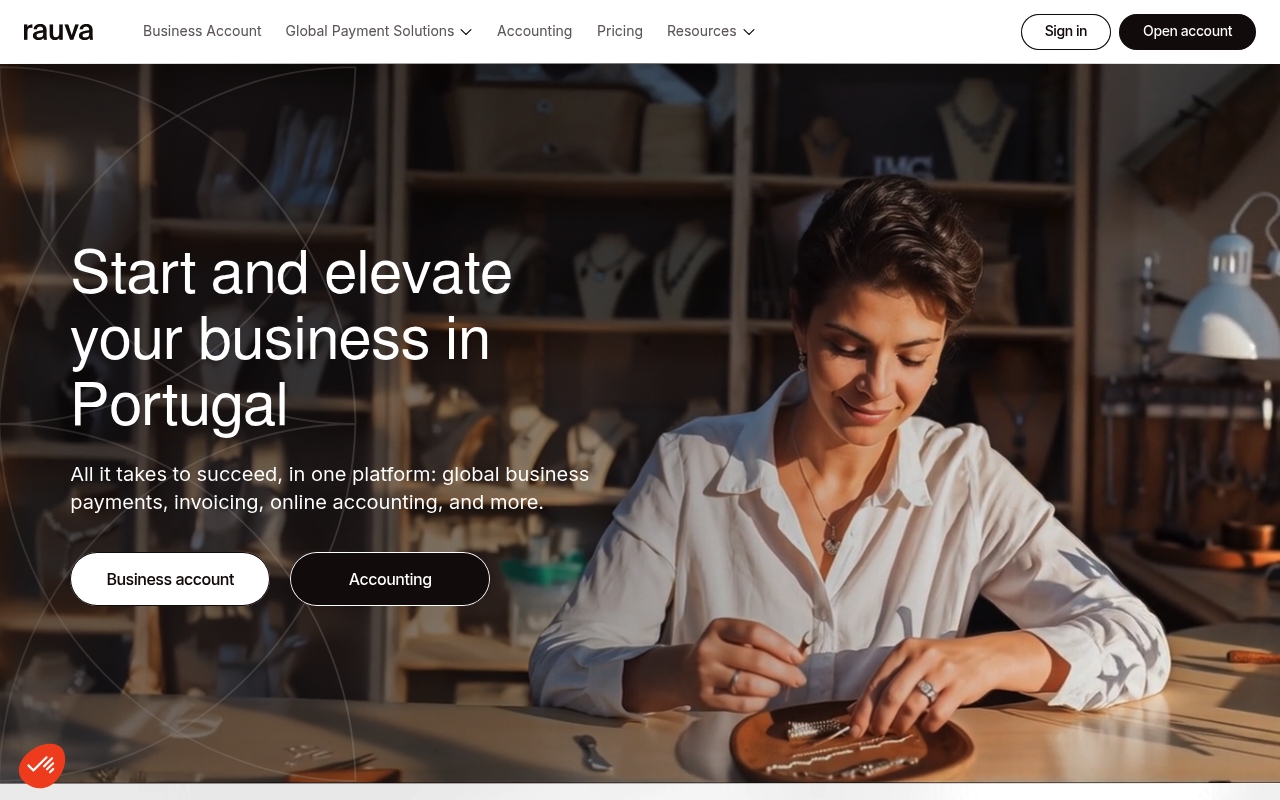
Rauva is a fintech platform built specifically for small business owners who are tired of juggling spreadsheets and fragmented tools. It combines invoicing, expense tracking, and financial reporting into a single dashboard, giving SMEs real-time visibility into their business finances without the accountant overhead. The platform connects directly to bank accounts and automatically categorizes transactions, turning raw financial data into actionable insights.
What sets Rauva apart is its focus on simplicity and speed. Rather than forcing businesses through complicated setup processes or charging enterprise-level fees, it delivers straightforward features that address the immediate pain points SMEs face: understanding cash flow, managing invoices, and staying on top of tax obligations. The interface feels built for people who run businesses, not for finance professionals.
In the crowded landscape of SME fintech, Rauva competes by refusing complexity. While competitors bundle accounting, payroll, and inventory management into bloated suites, Rauva stays laser-focused on financial visibility and reporting. It's the kind of tool a busy founder pulls up on Monday morning without needing a training session. The company has positioned itself as the alternative to traditional accounting software that feels stuck in the 2000s and overly expensive cloud-based platforms that are overkill for small teams.
Rauva represents the practical middle ground in SME finance: powerful enough to matter, simple enough to use.
Categories
SME FinancePersonal Finance
0
upvotes

ebury.com
Ebury
ebury.com🇬🇧 United Kingdom
Ebury is a fintech platform that helps small and medium-sized businesses manage their international payments and foreign exchange exposure. Founded in 2009, the company has grown into a significant player in cross-border commerce, serving thousands of SMEs across Europe and beyond who need to move money across currencies without the friction and cost of traditional banking.
The platform combines payment processing, FX services, and working capital financing into a single interface. Rather than juggling multiple bank relationships and struggling with opaque exchange rates, businesses get transparent pricing, competitive rates, and a digital-first experience that actually reflects how modern commerce operates. Ebury handles the complexity of international payments—whether that's paying suppliers in Poland, collecting revenue in Singapore, or managing exposure across dozens of currencies.
What sets Ebury apart in a crowded market is its focus on the unglamorous but essential problem of trade finance for SMEs. While fintechs chase consumer banking or headline-grabbing crypto plays, Ebury has quietly become indispensable to thousands of businesses that simply need reliable, cost-effective cross-border infrastructure. The company has expanded beyond payments into working capital solutions, recognizing that businesses moving money internationally often need flexible financing alongside their payment rails.
Ebury represents a pragmatic slice of European fintech—solving real problems for real businesses, generating sustainable revenue, and building the kind of B2B financial infrastructure that underpins European commerce.
Categories
PaymentsSME FinanceLendingTreasury
0
upvotes
payhawk.com
Payhawk
payhawk.com🇧🇬 Bulgaria
Most companies still manage corporate spending the way they did a decade ago—expense reports, manual reconciliation, scattered receipts. Payhawk has built something radically simpler: a unified spending platform that gives finance teams complete visibility into every company transaction, from the moment it's authorized to the moment it's reconciled. The platform combines physical and virtual cards, automated expense management, and real-time spend controls in a single dashboard.
What sets Payhawk apart in the crowded corporate finance space is its refusal to compromise on user experience. Employees aren't fighting clunky interfaces or wrestling with legacy systems. Instead, they get an intuitive mobile app that feels like personal fintech, while finance teams gain the analytical firepower to actually manage policy, catch fraud, and optimize spending patterns. The company treats visibility not as a nice-to-have but as the foundation of control.
In Europe's SME and mid-market space, where most alternatives still rely on outdated card programs or disconnected software suites, Payhawk's integration of issuance, spend management, and analytics represents a meaningful shift. The company has quietly built something that enterprises have wanted for years: a spending platform that doesn't require compromise between employee experience and financial governance. For finance leaders tired of spreadsheets and reactive reporting, it's become the natural choice.
Categories
SME FinanceDigital BankingEmbedded Finance
0
upvotes
blackcat.app
Blackcat
blackcat.app🇩🇪 Germany
Blackcat is a German fintech platform designed to help freelancers and self-employed professionals manage their finances with minimal friction. Rather than forcing users into complex accounting workflows, Blackcat simplifies the entire money flow—from invoicing to tax filing—with a mobile-first interface that feels more like a consumer app than enterprise software.
The platform tackles a real pain point in the European freelance economy: most existing tools are either bloated legacy systems or fragmented point solutions that don't talk to each other. Blackcat bundles invoicing, expense tracking, tax preparation, and business banking into one coherent experience, removing the cognitive load of juggling multiple services.
What sets Blackcat apart is its opinionated approach to simplicity. Rather than mirroring traditional accounting software's feature sprawl, it prioritizes the workflows that matter most to freelancers—getting paid faster, documenting expenses, and staying tax-compliant without the headache. The platform's integration with German tax authorities and compliance frameworks positions it as particularly valuable in the DACH region, where self-employed taxation can be notoriously complex.
In a market crowded with accounting tools and SME platforms, Blackcat represents a new generation of fintech that starts with the freelancer's actual needs rather than retrofitting legacy processes into a digital wrapper. It's part of a broader shift toward consolidated SME finance platforms that understand that complexity itself is the problem.
Categories
SME FinancePersonal Finance
0
upvotes

pleo.io
Pleo
pleo.io🇩🇰 Denmark
Pleo is a corporate expense management platform that treats company spending like a personal finance problem solved through software. Rather than the tedious reimbursement cycles and spreadsheet chaos of traditional corporate cards, Pleo gives employees physical and virtual cards coupled with real-time expense categorization and approval workflows that happen at the speed of a Slack message.
The company positions itself as the antidote to finance teams drowning in manual reconciliation. Employees get instant card access, automatic receipt capture via smartphone, and intelligent categorization that learns spending patterns. Meanwhile, finance teams gain real-time visibility into company spending without the usual lag and friction.
Pleo operates in a market where most companies still rely on legacy corporate card providers or outdated expense management software that feels bolted together from the 1990s. The Danish fintech has expanded across Europe, building a platform that combines the convenience of consumer fintech with the compliance and control requirements of enterprise finance.
It's become a reference point for how embedded finance and B2B SaaS can simplify workflows that enterprises have tolerated as painful for decades. The company sits comfortably at the intersection of business banking, card issuing, and expense automation—categories that individually are crowded but rarely integrated as seamlessly.
Categories
Digital BankingSME FinancePayments
0
upvotes

rampnetwork.com
Ramp
rampnetwork.com🇵🇱 Poland
Ramp is rewriting how companies spend money. Built for finance teams tired of spreadsheets and manual processes, it combines a corporate card, expense management, and accounting integrations into a single platform that actually talks to the software finance teams already use. Most corporate card programs feel like they were designed in 1995. Ramp feels like software built this decade—mobile-first, API-forward, and deeply integrated with tools like NetSuite and QuickBooks. The company started by solving a real problem: CFOs and controllers wasting hours reconciling card statements and expense reports. Instead of patching that broken workflow, Ramp replaced it entirely. You get a card, real-time spending controls, automated categorization, and instant syncing to your accounting system. No more manual entries, no more approval bottlenecks, no more spreadsheet chaos. The platform goes deeper than most competitors by combining physical and virtual cards with embedded controls—spend limits by department, merchant category, or individual employee. Finance teams can actually enforce policy in real time rather than auditing violations weeks later. Ramp operates in a crowded space, but it's differentiated by speed and simplicity. Where competitors try to be everything to everyone, Ramp has kept focus on what CFOs actually care about: reducing manual work, improving visibility, and cutting unnecessary spending. Its integration-first approach means it's not trying to replace your entire finance stack—it's designed to slot in and make your existing tools work harder. For mid-market companies tired of manual expense management and lacking the complexity of enterprise-grade solutions, Ramp has become the obvious choice. It's also been ruthless about profitability, reaching positive unit economics early, which matters in a category where many competitors burned through billions before proving their model worked.
Categories
SME FinancePaymentsFinancial Infrastructure
0
upvotes
coverflex.com
Coverflex
coverflex.com🇵🇹 Portugal
Coverflex is rewriting how freelancers and gig workers access financial security in Europe. Instead of the traditional employment model, the platform bundles flexible work with genuine benefits—health insurance, pension contributions, and paid leave—creating a middle path between employment and total independence.
The company essentially flips the script on gig economy precarity. Workers stay independent contractors but gain access to protections that were previously locked behind 9-to-5 employment. Employers get a simpler way to hire flexible talent without managing traditional payroll complexity. It's a fundamentally different architecture for modern work.
Coverflex operates across multiple European markets and has built a B2B2C model where companies use the platform to offer benefits to their contractor workforce. The business combines insurance brokerage, financial services coordination, and workplace infrastructure into one interface.
In a landscape where gig work remains fragmented and precarious, Coverflex sits at the intersection of fintech and HR tech, solving a genuine gap in how Europe's growing contingent workforce accesses security and stability.
Categories
Digital BankingSME FinanceInsurTech
0
upvotes
wayflyer.com
Wayflyer
wayflyer.com🇮🇪 Ireland
Wayflyer is an Irish fintech that solves a peculiar problem in e-commerce: founders who sell online often can't access the capital they need because traditional banks don't understand their business model. The company uses real-time sales data from platforms like Shopify and Amazon to underwrite credit decisions in minutes rather than months, offering flexible funding with repayment terms tied directly to daily revenue.
What makes Wayflyer different is its willingness to lend to merchants that legacy finance overlooks—lower-revenue sellers, newer businesses, international operators. While traditional lenders fixate on collateral and personal credit scores, Wayflyer looks at transaction flows, growth trajectory, and actual business performance. The underwriting is algorithmic, the approval is fast, and the cost is transparent. You don't need perfect credit or three years of accounts. You need sales data.
In the crowded world of e-commerce financing, most players focus either on micro-loans or venture-scale rounds. Wayflyer operates in the messy middle—typically funding between €5,000 and €500,000 for merchants generating €30,000+ monthly revenue. It competes with Shopify Capital in North America but has built particular strength across Europe, where merchant fragmentation is higher and credit access more constrained.
The company represents a broader shift in fintech: away from point solutions toward platforms that integrate data, credit decisioning, and cash flow management. Wayflyer isn't just lending; it's becoming infrastructure for the digital commerce economy, particularly for the thousands of small sellers who power e-commerce but remain invisible to traditional finance.
Categories
LendingSME Finance
0
upvotes
bidfinance.eu
Bid Finance
bidfinance.eu🇵🇱 Poland
Bid Finance is a European platform that streamlines how small and mid-sized businesses access working capital finance. Rather than the traditional dance of chasing multiple lenders and dealing with weeks of paperwork, the platform lets SMEs connect with a curated network of funding providers—banks, alternative lenders, and institutional investors—through a single application. The process is built around speed and transparency: once a business posts its financing need, multiple lenders can compete for the deal, which typically means better terms and faster decisions.
What sets Bid Finance apart is its marketplace model. Instead of being another loan originator or broker that simply refers you somewhere else, it facilitates genuine competition between funders. SMEs see real-time offers and can compare pricing and terms side by side. It's the B2B equivalent of price transparency in consumer finance, but applied to the murky world of business lending where information asymmetry has long been the norm.
The platform operates across multiple European markets, positioning itself as a pan-European solution for working capital, invoice financing, and asset-based lending. It targets businesses that don't fit neatly into the big bank's playbooks—growing firms that need flexible, responsive funding without the bureaucracy. For lenders, it reduces sourcing costs and lets them plug into deal flow they'd otherwise struggle to access.
Bid Finance represents a broader shift in how European SMEs access capital: moving away from relationship banking and towards digital-first, competitive marketplaces where multiple parties bid on deals in near real-time.
Categories
LendingSME Finance
0
upvotes