Category
Country
Companies10 of 74
tink.com
TinkFeatured
tink.com🇸🇪 Sweden
Tink is a Swedish open banking platform that connects to over 3,000 financial institutions across Europe, solving the friction between fintech ambition and banking reality. Rather than building their own infrastructure from scratch, startups and established financial companies plug into Tink's APIs to instantly access account data, initiate payments, and orchestrate complex financial workflows without dealing with legacy banking plumbing.
The company sits at the intersection of three powerful trends: the shift toward embedded finance, the regulatory tailwinds of PSD2 and Open Banking, and the growing irrelevance of traditional bank APIs. While competitors chase headlines with consumer-facing apps, Tink operates in the less glamorous but infinitely more valuable B2B2C layer—the infrastructure that quietly powers dozens of European fintech winners.
What sets Tink apart is execution at scale. Their data aggregation and payment initiation services work reliably across fragmented European banking systems, which is harder than it sounds. Most fintechs eventually realize they need a Tink-like layer to escape the nightmare of maintaining connections to hundreds of banks with different technical standards and frequent updates.
That importance hasn’t gone unnoticed. In 2022, Tink was acquired by Visa, a move that underscored just how critical open banking infrastructure has become. The acquisition gave Tink both validation and reach, positioning it even closer to the core of the global payments ecosystem.
Tink represents the unglamorous backbone of modern European fintech—the kind of company that doesn't dominate headlines but becomes quietly indispensable to everyone building financial products.
Categories
Open BankingFinancial InfrastructureEmbedded Finance
Est. 2012B2BB2B2CEurope200-500 employees
Updated today
1
upvotes
fourthline.com
Fourthline
fourthline.com🇳🇱 Netherlands
Fourthline is a Amsterdam-based identity verification and KYC infrastructure company built for the moment when compliance became fast. While traditional onboarding still takes weeks and swallows users in document checklists, Fourthline has engineered a streamlined verification engine that lets companies know who their customers are in seconds, not cycles. The platform combines biometric identity checks, document verification, and AML screening into a single API that developers can plug directly into their applications. This is infrastructure for fintech founders who want to launch regulated products without drowning in back-office friction. Fourthline works across Europe, handling everything from digital ID verification to sanctions screening, which means compliance teams get the certainty they need while customers skip the paperwork torture. The company occupies a crucial gap in the market: enterprises and fintechs need identity solutions that are both fast and bulletproof, and Fourthline has built exactly that. By treating KYC like a technical problem rather than a bureaucratic one, the company has positioned itself as the backbone for the next wave of fintech products that won't tolerate friction during signup.
Categories
Identity & KYC
Est. 2017B2BEurope50-200 employees
Updated today
2
upvotes
mollie.com
Mollie
mollie.com🇳🇱 Netherlands
Mollie is a payment infrastructure company built for the internet age. Rather than forcing merchants through the byzantine setup process traditional payment processors demand, Mollie strips away the friction. You connect a few APIs, define your payment methods, and suddenly you're accepting everything from credit cards to local payment schemes across Europe—all without the operational headache of managing multiple provider relationships.
What sets Mollie apart is its uncompromising focus on developer experience. The company treats its payment platform the way SaaS companies treat their core products: with obsessive attention to documentation, dashboard clarity, and API elegance. Mollie handles the compliance complexity, the fraud monitoring, the settlement logistics. Merchants get a single pane of glass.
For a continent fragmented by payment preferences—iDEAL in the Netherlands, Bancontact in Belgium, SEPA everywhere—Mollie's multi-method approach feels essential rather than nice-to-have. The company works at the intersection of European e-commerce growth and the technical debt of legacy payment infrastructure, making it indispensable to thousands of online businesses that would rather build products than negotiate with acquiring banks.
Mollie has become something like the connective tissue of European payments: not as visible as the brands merchants serve, but embedded in the transaction flows of digital commerce across the continent.
Categories
PaymentsFinancial Infrastructure
Est. 2012B2BB2B2CEurope500-1000 employees
Updated 4 days ago
1
upvotes
n26.com
N26
n26.com🇩🇪 Germany
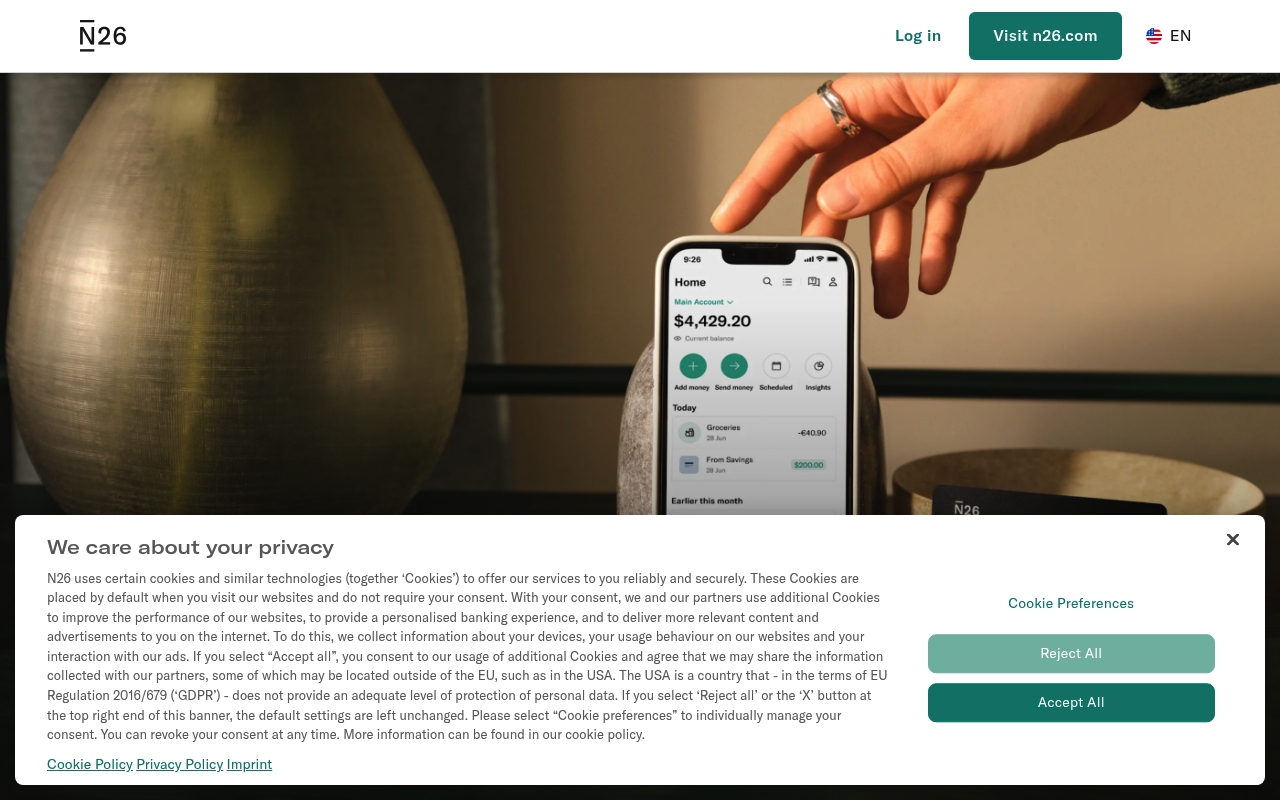
N26 is a mobile-first bank built for people who live on their phones. Founded in Berlin in 2013, it stripped away the branch infrastructure, the paperwork, and the friction of traditional banking to create something genuinely frictionless: open an account in eight minutes from your sofa, spend money abroad without hidden fees, and track every transaction in real time. The appeal is straightforward—a bank that doesn't feel like a bank, designed by people who thought the existing ones were broken.
What sets N26 apart in Europe's crowded neobank space is its relentless focus on simplicity and speed. While competitors pile on features, N26 has doubled down on the core experience: fast onboarding, clean design, transparent pricing, and genuinely useful cards (both physical and virtual). The company holds full banking licenses across multiple European markets, which matters—it means real FDIC-equivalent deposit protection, not just a payment account.
N26 operates in a landscape where dozens of neobanks are fighting for the same attention span. The difference is in execution. It doesn't promise to replace your banker or offer premium wealth management. Instead, it's the everyday account you actually want to use, particularly if you travel, spend across borders, or just can't be bothered with your bank's mobile app. That positioning—ambitious enough to be genuinely useful, modest enough to be believable—has resonated with millions of young Europeans who've never seen the point of a traditional bank.
In the broader fintech ecosystem, N26 represents the successful version of the neobank thesis: regulated, profitable-path clarity, and genuinely differentiated from legacy competitors. It's less disruptive than transformative—not reinventing finance, but making daily banking feel like it was designed in the last decade.
Categories
Digital BankingPayments
Est. 2013B2CEurope500-1000 employees
Updated 4 days ago
0
upvotes
buut.com
BUUT
buut.com🇳🇱 Netherlands
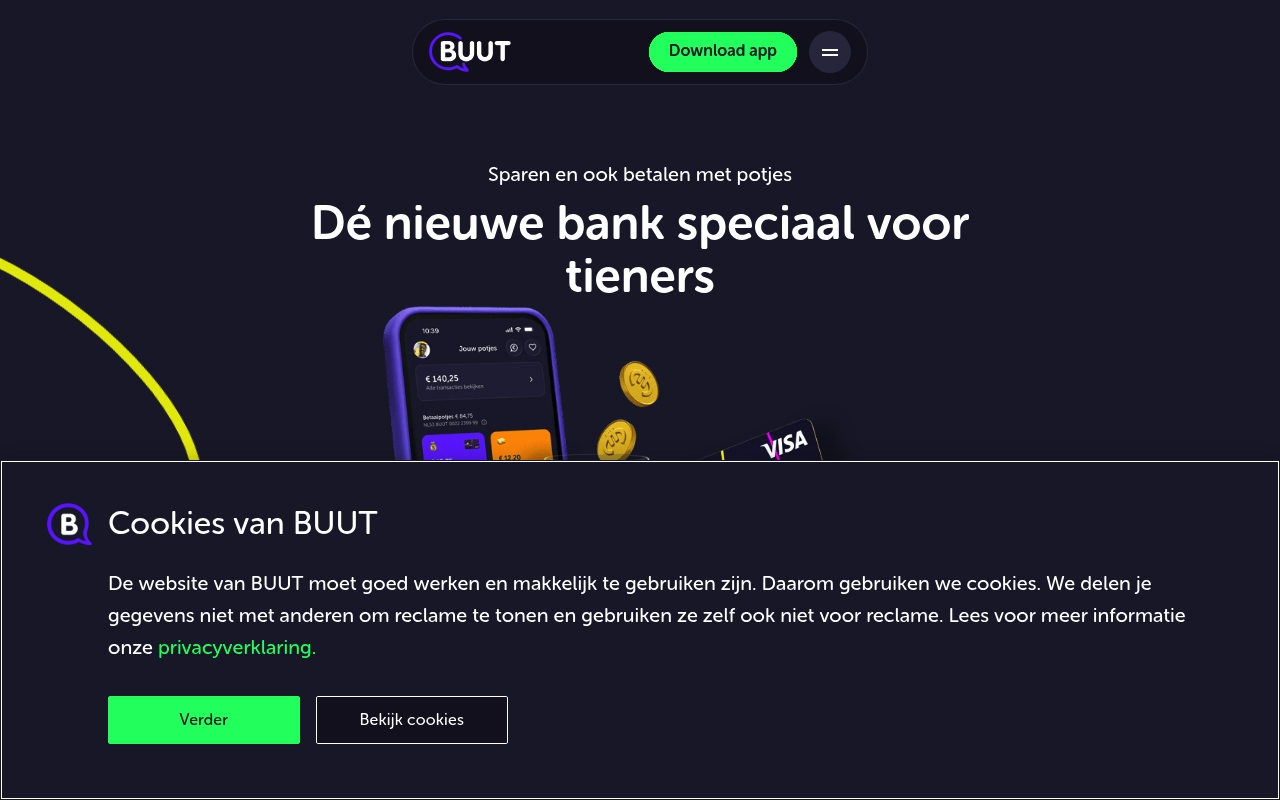
BUUT is part of a new wave of European neobanks rethinking what everyday banking should feel like—this time with a specific audience in mind: young users aged 10 to 16. Instead of overwhelming first-time users with complex features, it leans into simplicity, guidance, and a smoother introduction to managing money.
At its core, BUUT is designed to make financial habits easy to build early on. The app focuses on clean design, intuitive navigation, and a user experience that feels natural from the start. Spending, saving, and tracking money are presented in a way that’s easy to understand—less like dealing with a bank, and more like using a well-designed everyday app.
There’s also a shift in tone compared to traditional banking. BUUT speaks to a younger audience without talking down to them. It removes the friction and confusion that often come with financial tools, replacing it with clarity and a sense of control. The aim isn’t to teach finance through complexity, but to make good habits feel almost automatic.
What sets BUUT apart is its restraint. While many fintech apps compete to become all-in-one financial platforms, BUUT keeps things focused. It prioritizes usability and trust—especially important when users are just starting to interact with money on their own.
That makes it particularly relevant for a new generation growing up fully digital. BUUT fits naturally into their daily lives, offering a first step into financial independence without the intimidation factor.
In a crowded European fintech landscape, BUUT stands out by doing less, but doing it thoughtfully—helping younger users build confidence with money from the very beginning.
Categories
Personal FinanceDigital Banking
Est. 2025B2CB2B2CWestern Europe10-50 employees
Updated today
0
upvotes
traderepublic.com
Trade Republic
traderepublic.com🇩🇪 Germany
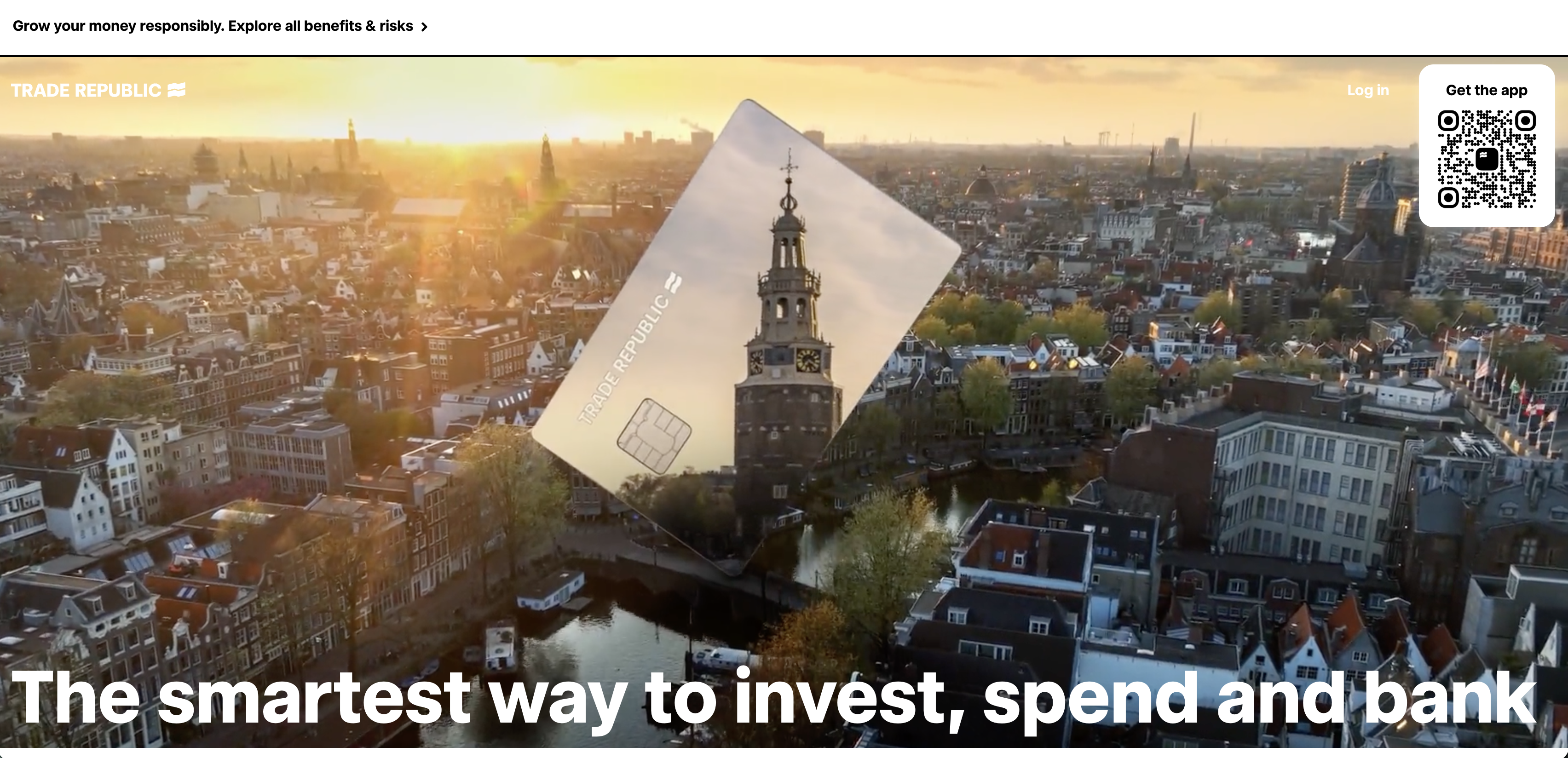
Trade Republic has fundamentally rewritten the script for European retail investing. Where traditional brokers demanded minimums, paperwork, and fees that could swallow returns, this Berlin-based neobroker arrived in 2015 with a smartphone app and a radical premise: investing should cost almost nothing and take seconds.
The platform trades stocks, ETFs, and fractional shares across multiple European exchanges with zero commissions. Its core strength is simplicity—the interface strips away complexity while maintaining the depth serious investors expect. Execution is fast, the fee structure is transparent (mostly subscription-based rather than per-trade), and the onboarding process reflects modern expectations around speed and convenience.
Trade Republic sits at the convergence of neobanking and trading. While competitors like Revolut added trading as a secondary feature, Trade Republic built the entire experience around it. The company holds banking licenses across multiple EU jurisdictions, giving it the infrastructure to manage cash, offer savings features, and issue debit cards—all in service of becoming a financial operating system for young Europeans.
Its expansion beyond trading into banking products reflects a broader industry shift: the most valuable fintech companies aren't specialists anymore. They're ecosystems. Trade Republic's role in the European fintech landscape is as a proof of concept that direct-to-consumer wealth management, executed with design discipline and regulatory precision, can scale rapidly while maintaining unit economics that would make traditional brokers blush.
Categories
WealthDigital BankingPersonal Finance
Est. 2015B2CEurope500-1000 employees
Updated 4 days ago
0
upvotes
adyen.com
Adyen
adyen.com🇳🇱 Netherlands
Adyen is the global payments infrastructure that powers the world's biggest brands. Founded in Amsterdam and now operating across every major market, it's the connective tissue between retailers, their customers, and the financial system—processing everything from online checkouts to in-store transactions to marketplace payouts in a single, unified platform.
What sets Adyen apart is its refusal to operate as a traditional payments middleman. Instead of bolting together separate processors, gateways, and acquirers, it built its own infrastructure from the ground up, meaning faster settlement, lower friction, and genuine transparency on what you're actually paying. You see this philosophy everywhere: merchants get real-time visibility into their payments, developers integrate once and reach hundreds of payment methods, and the company has stayed agnostic to trends—it processes crypto as easily as it processes credit cards, embedded payments as easily as it processes commerce.
In a market crowded with legacy processors and upstart fintechs, Adyen occupies a unique position: it's genuinely global without being a sprawling conglomerate, technically sophisticated without being inaccessible, and profitable without relying on venture capital.
For enterprises serious about payments—whether they're selling fashion, booking flights, or managing marketplaces—Adyen represents the modern alternative to fragmented, outdated payment stacks.
Categories
PaymentsFinancial InfrastructureEmbedded Finance
Est. 2006B2BB2B2CEurope1000+ employees
Updated 3 days ago
0
upvotes
pleo.io
Pleo
pleo.io🇩🇰 Denmark
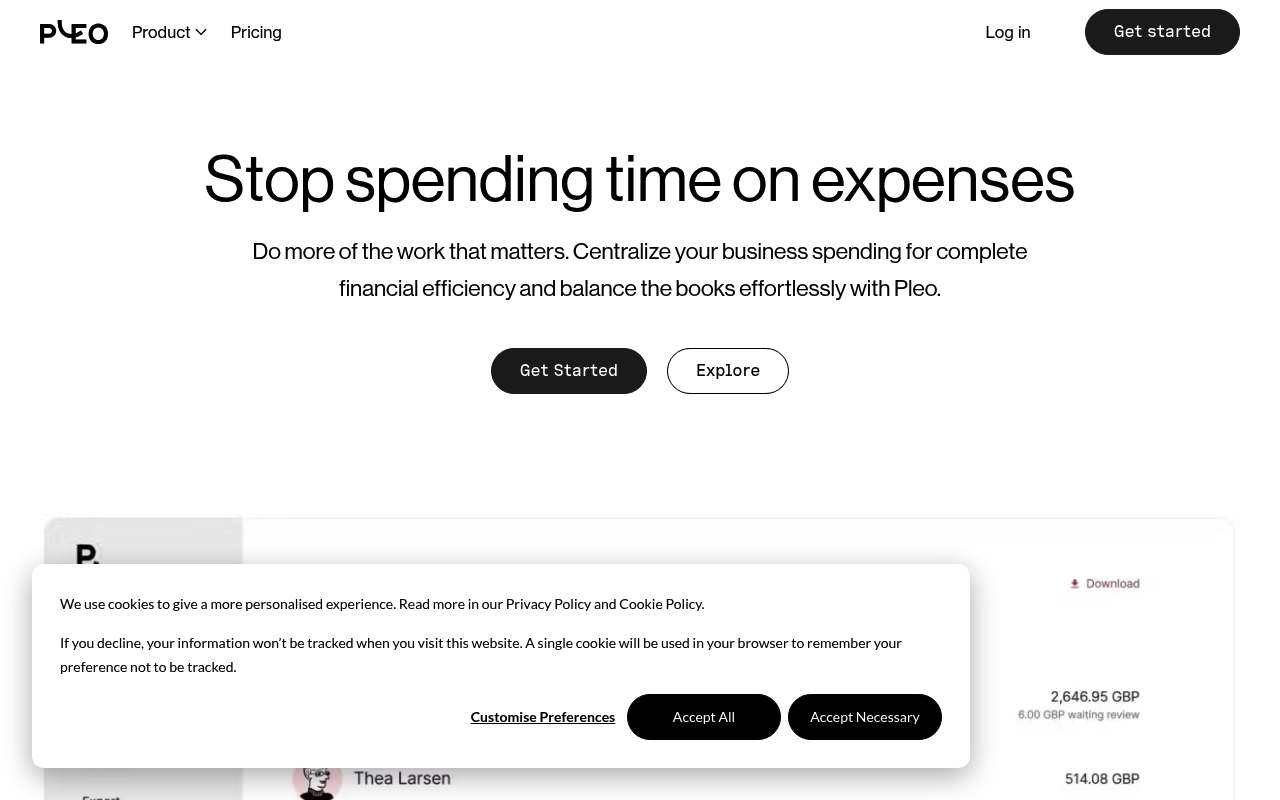
Pleo is a corporate expense management platform that treats company spending like a personal finance problem solved through software. Rather than the tedious reimbursement cycles and spreadsheet chaos of traditional corporate cards, Pleo gives employees physical and virtual cards coupled with real-time expense categorization and approval workflows that happen at the speed of a Slack message.
The company positions itself as the antidote to finance teams drowning in manual reconciliation. Employees get instant card access, automatic receipt capture via smartphone, and intelligent categorization that learns spending patterns. Meanwhile, finance teams gain real-time visibility into company spending without the usual lag and friction.
Pleo operates in a market where most companies still rely on legacy corporate card providers or outdated expense management software that feels bolted together from the 1990s. The Danish fintech has expanded across Europe, building a platform that combines the convenience of consumer fintech with the compliance and control requirements of enterprise finance.
It's become a reference point for how embedded finance and B2B SaaS can simplify workflows that enterprises have tolerated as painful for decades. The company sits comfortably at the intersection of business banking, card issuing, and expense automation—categories that individually are crowded but rarely integrated as seamlessly.
Categories
Digital BankingSME FinancePayments
Est. 2015B2BB2B2CEurope200-500 employees
Updated 4 days ago
0
upvotes
wefox.com
wefox
wefox.com🇨🇭 Switzerland
Wefox is a digital insurance broker that cuts through the noise of traditional insurance shopping. Rather than piecing together quotes from multiple providers, customers get personalized coverage recommendations through a streamlined mobile-first platform. The company bundles home, auto, and pet insurance into a single digital experience, handling everything from comparison to claims—no brokers in grey suits required.
What sets wefox apart in Europe's insurance landscape is its focus on simplicity. While legacy brokers still rely on phone calls and paperwork, wefox does the legwork algorithmically, comparing hundreds of policies in seconds and presenting only the relevant options. The interface feels less like insurance shopping and more like opening a fintech app.
The company operates across multiple European markets, building a tech-forward alternative to the tired insurance broker model. It's positioned as insurance for people who'd rather not think about insurance—until they need to claim. In the broader fintech ecosystem, wefox represents a straightforward play on distribution innovation: taking an opaque, offline-first industry and making it transparent, fast, and mobile-native.
Categories
InsurTech
Est. 2015B2CB2B2CEurope500-1000 employees
Updated 4 days ago
0
upvotes
checkout.com
Checkout.com
checkout.com🇬🇧 United Kingdom
Checkout.com is a global payments infrastructure company that builds the plumbing beneath the surface of e-commerce. While most payment processors still operate like legacy banking rails, Checkout.com has constructed a single API that connects directly to card networks, acquiring banks, and alternative payment methods—eliminating the middlemen that slow everything down. The platform processes payments in over 150 currencies across 195 countries, handling everything from straightforward card transactions to complex multi-currency settlements for merchants operating at scale.
What sets it apart in Europe and beyond is its refusal to be a typical payment gateway: instead of asking merchants to adapt to the network, Checkout.com adapts the network to the merchant. Founded in 2012 by Guillermo Gutiérrez García-Ceballos, the company has grown from a London-based startup into a critical piece of infrastructure for enterprises, fintechs, and marketplaces that need orchestration at the transaction level. It competes with traditional acquirers and modern payment platforms by combining the reliability of legacy banking with the speed and flexibility developers expect.
In the fragmented European payments landscape, Checkout.com has become indispensable for companies that refuse to compromise on latency, coverage, or control. The company represents a fundamental shift in how payments should work: less about choosing between payment methods and more about making payments invisible.
Categories
PaymentsFinancial InfrastructureEmbedded Finance
Est. 2012B2BB2B2CEurope500-1000 employees
Updated 2 days ago
0
upvotes