Country
Companies5 of 5
qonto.com
Qonto
qonto.com🇫🇷 France
Qonto is a European business banking platform that treats SMEs and freelancers the way tech-forward founders wish their banks would: fast, transparent, and built for how modern companies actually operate. Instead of waiting days for payments to clear or wrestling with legacy banking interfaces, Qonto users get instant payments, real-time visibility across their accounts, and integrations that sync seamlessly with their existing tools.
The platform lives at the intersection of traditional banking and fintech simplicity. Qonto handles everything from multi-currency accounts and payment processing to expense management and financial reporting, all from a mobile-first interface that feels like an app, not a bank. The company has quietly become the go-to choice for growing SMEs across Europe who want banking that doesn't slow them down.
What sets Qonto apart in a crowded B2B banking space is its obsessive focus on the user experience and its commitment to European expansion. While many neobanks either chase mass-market consumers or hide behind enterprise complexity, Qonto sits in a sweet spot: accessible enough for a solo founder, powerful enough for teams managing millions in annual revenue. The company's growth across France, Germany, Spain, Italy, and beyond reflects a simple truth: European businesses have been waiting for a bank that understands their needs.
As European business banking undergoes its biggest transformation in decades, Qonto stands as proof that the future of SME finance isn't about moving fast and breaking things—it's about moving fast and building things that actually work.
Categories
Digital BankingSME FinancePayments
0
upvotes
kyriba.com
Kyriba
kyriba.com🇫🇷 France
Kyriba is a cloud-native treasury and finance platform that sits at the intersection of corporate finance operations and intelligent automation. Rather than patching together spreadsheets and legacy systems, Kyriba consolidates cash management, liquidity forecasting, and working capital visibility into a single operating system for finance teams. Think of it as the command center for CFOs who are tired of fragmented data and manual workflows.
The platform handles everything from multi-currency cash positioning to FX hedging and supply chain financing, all orchestrated through APIs that plug into banks and accounting systems. It's built for mid-market to enterprise companies that move serious money across borders and need to know exactly where every dollar sits at any given moment. Kyriba doesn't try to be a banker or a startup darling—it's an industrial-grade tool that speaks the language of corporate treasurers.
In the European treasury space, Kyriba competes with legacy software vendors but with a modern cloud architecture that actually scales. It's the kind of platform that gets adopted quietly but becomes mission-critical once companies realize how much time their finance teams get back. The market for treasury automation remains sticky and consolidating, but Kyriba has built a defensible position by solving the unglamorous but essential work of helping large corporations optimize their balance sheets and reduce financial risk.
Categories
Treasury
0
upvotes
younited-credit.com
Younited Credit
younited-credit.com🇫🇷 France
Younited Credit sits at the intersection of consumer lending and fintech, offering personal loans to borrowers across Europe who want speed and transparency instead of the bureaucratic friction of traditional banks. Founded in 2011, the company has evolved from a peer-to-peer lending marketplace into a full-stack credit platform that sources, prices, and services loans for both retail customers and institutional partners.
The core product is straightforward: quick online approval (often minutes), competitive rates based on real underwriting, and a streamlined digital experience that feels more like ordering something on your phone than sitting in a bank branch. What distinguishes Younited from the crowded European consumer lending space is its scale and sophistication. Rather than just operating a marketplace, the company has built proprietary credit scoring models, automated servicing infrastructure, and a diversified funding model that includes institutional investors, warehouse financing, and securitization. This means Younited isn't dependent on peer-to-peer investors or a single funding source—it can grow independently. The platform operates across multiple European markets and has become a quiet infrastructure player for consumer credit, processing loans for direct borrowers while also powering lending for third parties through white-label partnerships. In an era when legacy banks still treat personal lending like a commodity and fintechs are scrambling to prove unit economics, Younited represents the pragmatic middle ground: technology-first underwriting and customer experience wrapped around a business model that actually scales profitably.
Categories
LendingPersonal Finance
0
upvotes
ledger.com
Ledger
ledger.com🇫🇷 France
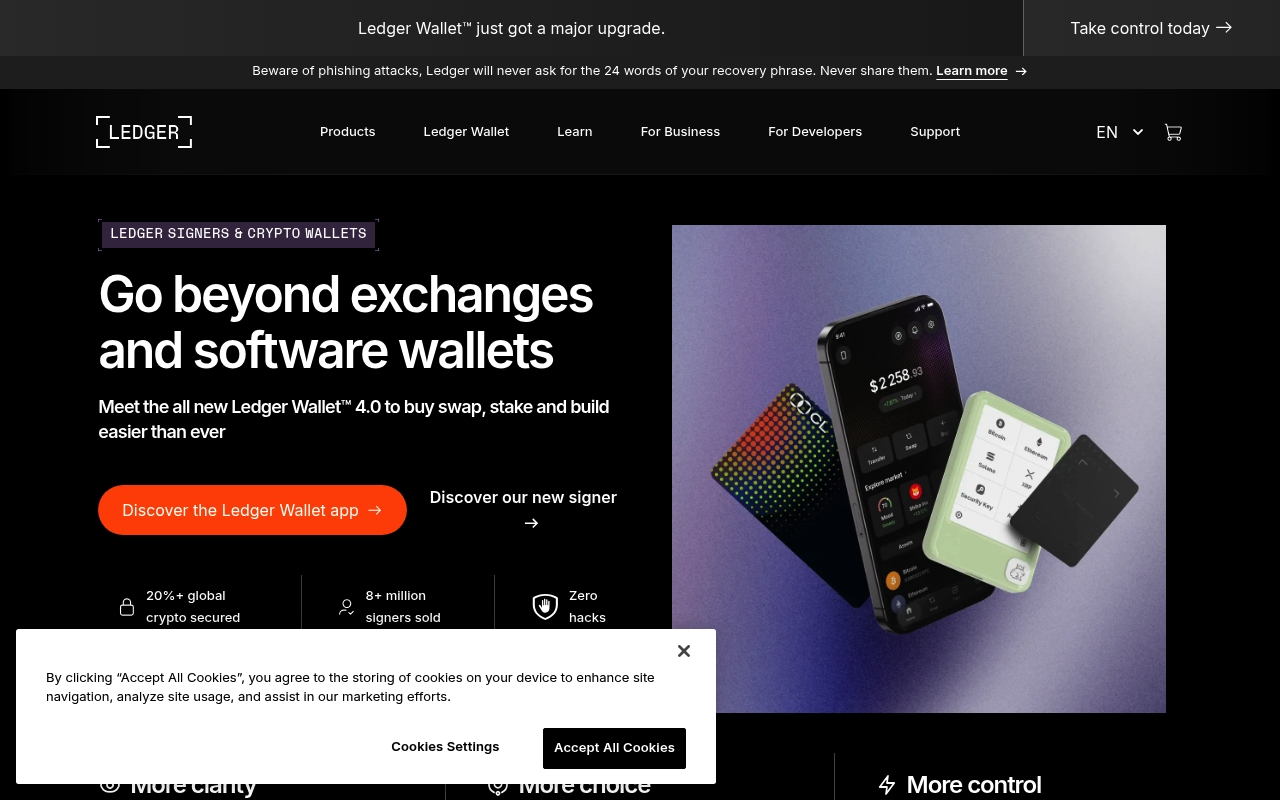
Ledger is the world's most recognizable cryptocurrency hardware wallet manufacturer, though the company has evolved well beyond that single product. Founded in 2014, it pioneered the idea that self-custody of digital assets could be both secure and user-friendly, making crypto accessible to millions who otherwise would have left their holdings on exchanges. The company operates as a full-stack crypto infrastructure provider, offering hardware wallets (Ledger Nano S and X), a software wallet platform, and developer APIs that let third-party services integrate Ledger's security model into their own products.
What sets Ledger apart in the crypto space is its obsessive focus on security through isolation. While competitors often offer software wallets or custodial solutions, Ledger's approach keeps private keys permanently offline, eliminating the attack surface that plagues hot wallets. The company has successfully maintained that zero-breach record for a decade, which matters enormously in an industry built on trust and skepticism. Beyond hardware, Ledger has quietly built a platform ecosystem—Ledger Live (the official app) aggregates portfolio tracking, staking, swaps, and third-party integrations, turning the wallet into something closer to a financial operating system for crypto natives.
Ledger operates at a fascinating intersection of consumer hardware business and B2B infrastructure play. Millions of individual users buy Ledger devices directly, but the company also licenses its technology to banks, exchanges, and other financial institutions looking to offer institutional-grade custody. It's a rare position in fintech: simultaneously a consumer brand (few non-crypto companies sell physical products as recognizable as a Ledger Nano) and an enterprise security provider. That duality has made Ledger one of Europe's most valuable fintech unicorns, though it remains private. In the broader fintech ecosystem, Ledger represents the backbone layer—the infrastructure that makes decentralized finance possible without requiring users to become security experts themselves.
Categories
Crypto & Blockchain
0
upvotes
swan.io
Swan
swan.io🇫🇷 France
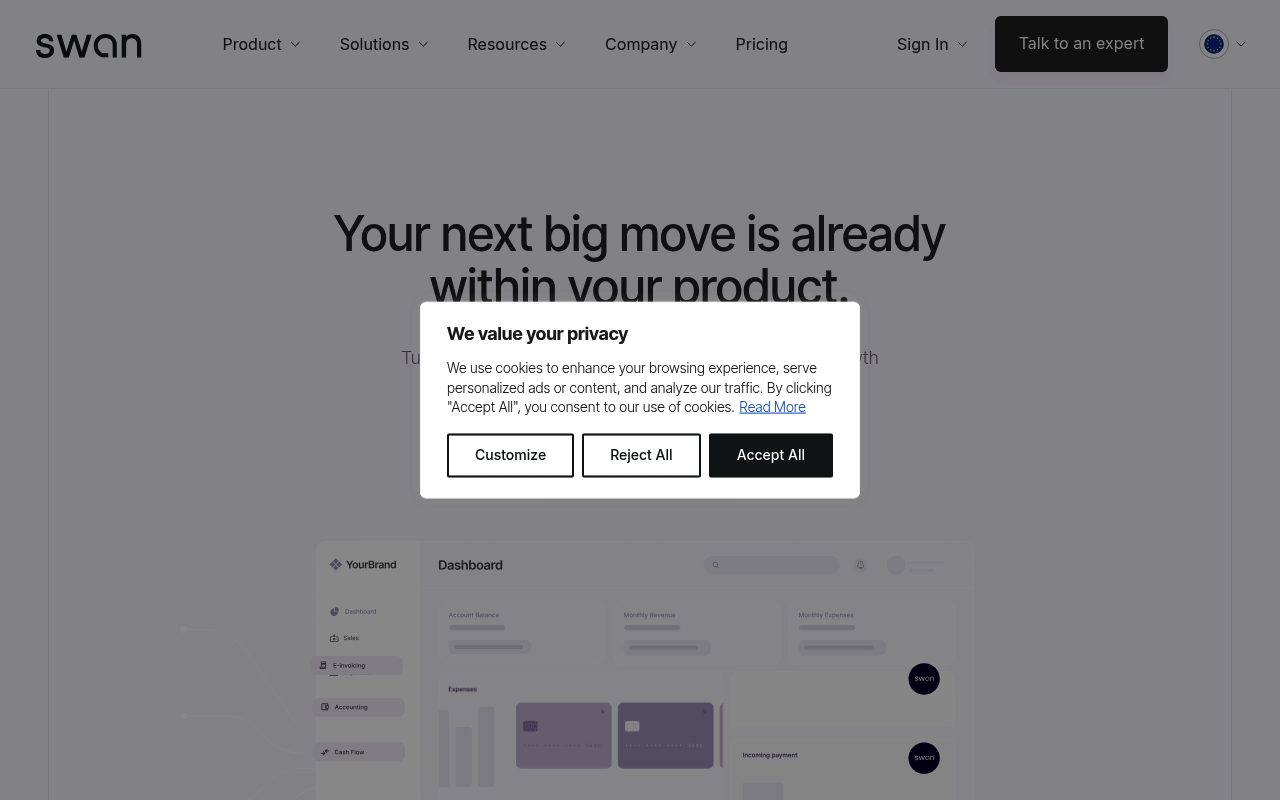
Swan is reshaping how European businesses handle payments by offering a modern, developer-friendly infrastructure layer that sits between companies and the complexity of traditional banking rails. Rather than forcing startups and established firms to navigate fragmented payment ecosystems, Swan bundles together payment processing, banking APIs, and compliance tooling into a single, coherent platform.
The company targets mid-market and enterprise customers—think e-commerce platforms, SaaS businesses, and financial services—who need to embed payments into their core operations without hiring a dedicated payments team. Swan's core strength lies in its ability to strip away legacy banking friction: it handles card processing, instant payments, payouts, and cross-border transfers through a unified API, while managing the regulatory headaches that usually consume engineering bandwidth.
In a European landscape crowded with payment gateways and banking APIs, Swan distinguishes itself through developer experience and architectural clarity. Where competitors often bolt together disparate services, Swan presents a genuinely integrated stack—one codebase, one dashboard, one billing model. The company serves as both a payments operator and a bridge to traditional banking, making it particularly valuable for businesses scaling beyond their first million transactions.
Swan represents a broader maturation in European fintech infrastructure: the shift from "we'll process your payments" to "we'll become your payments backbone," enabling a generation of companies to focus on their core product rather than payment plumbing.
Categories
PaymentsFinancial InfrastructureOpen Banking
0
upvotes