Country
Companies10 of 12
n26.com
N26
n26.com🇩🇪 Germany
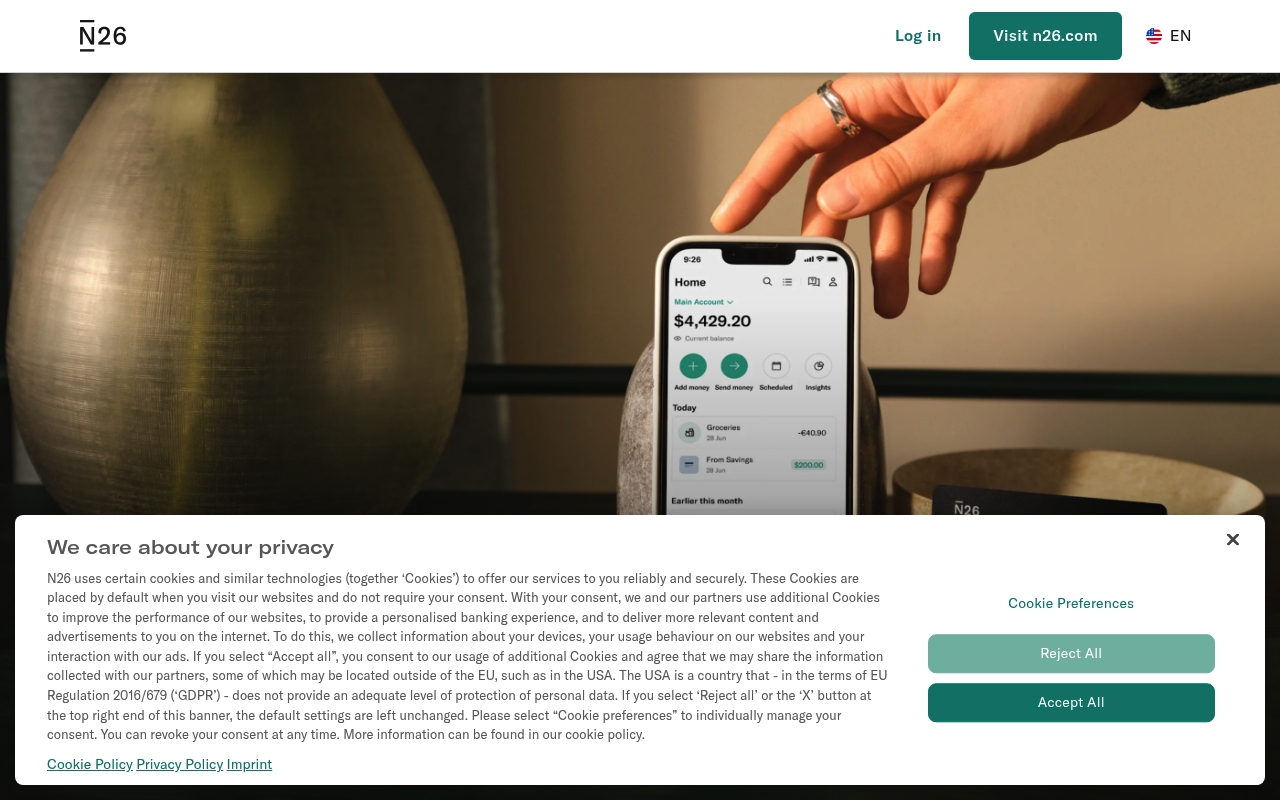
N26 is a mobile-first bank built for people who live on their phones. Founded in Berlin in 2013, it stripped away the branch infrastructure, the paperwork, and the friction of traditional banking to create something genuinely frictionless: open an account in eight minutes from your sofa, spend money abroad without hidden fees, and track every transaction in real time. The appeal is straightforward—a bank that doesn't feel like a bank, designed by people who thought the existing ones were broken.
What sets N26 apart in Europe's crowded neobank space is its relentless focus on simplicity and speed. While competitors pile on features, N26 has doubled down on the core experience: fast onboarding, clean design, transparent pricing, and genuinely useful cards (both physical and virtual). The company holds full banking licenses across multiple European markets, which matters—it means real FDIC-equivalent deposit protection, not just a payment account.
N26 operates in a landscape where dozens of neobanks are fighting for the same attention span. The difference is in execution. It doesn't promise to replace your banker or offer premium wealth management. Instead, it's the everyday account you actually want to use, particularly if you travel, spend across borders, or just can't be bothered with your bank's mobile app. That positioning—ambitious enough to be genuinely useful, modest enough to be believable—has resonated with millions of young Europeans who've never seen the point of a traditional bank.
In the broader fintech ecosystem, N26 represents the successful version of the neobank thesis: regulated, profitable-path clarity, and genuinely differentiated from legacy competitors. It's less disruptive than transformative—not reinventing finance, but making daily banking feel like it was designed in the last decade.
Categories
Digital BankingPayments
0
upvotes
traderepublic.com
Trade Republic
traderepublic.com🇩🇪 Germany
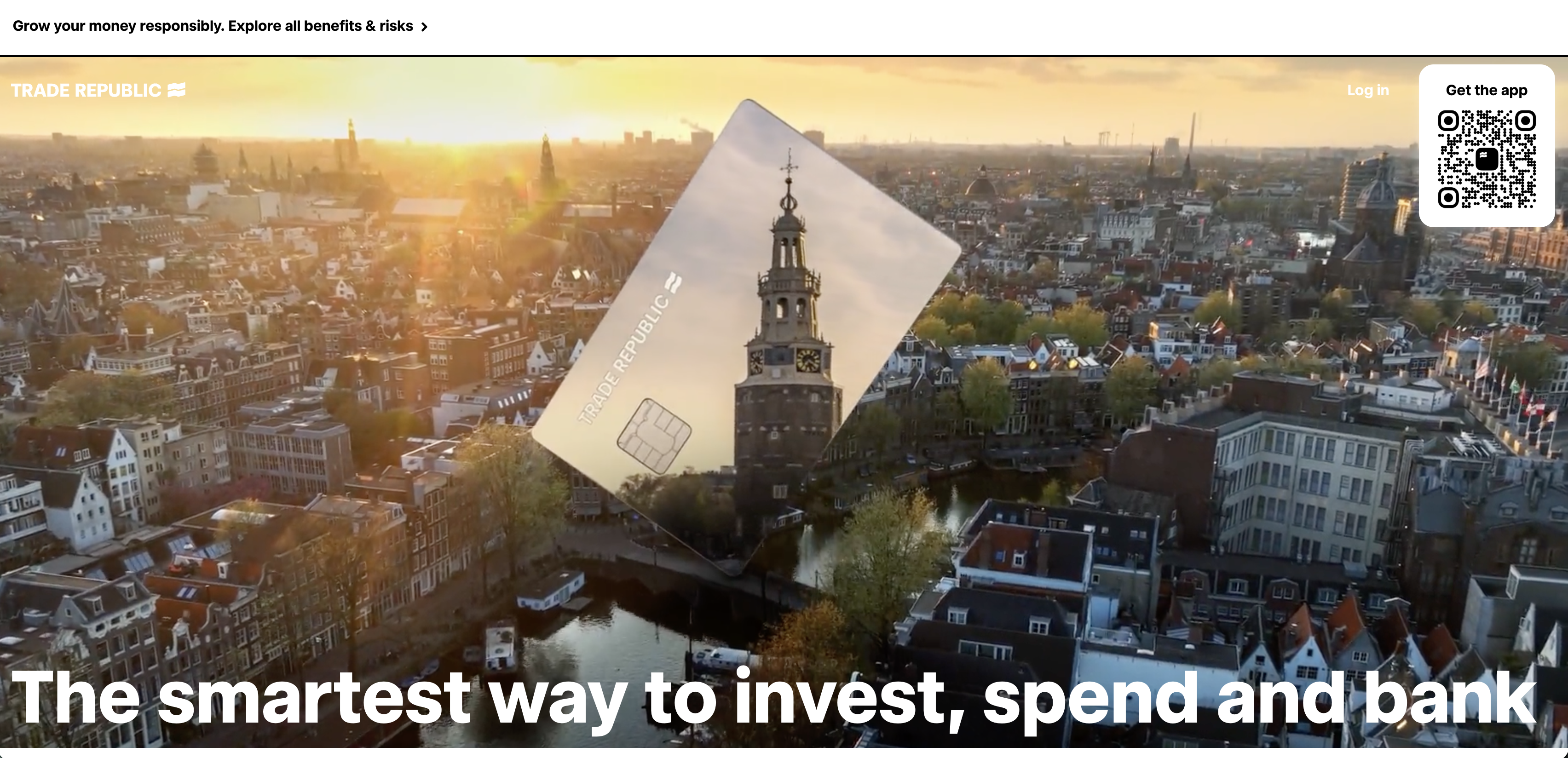
Trade Republic has fundamentally rewritten the script for European retail investing. Where traditional brokers demanded minimums, paperwork, and fees that could swallow returns, this Berlin-based neobroker arrived in 2015 with a smartphone app and a radical premise: investing should cost almost nothing and take seconds.
The platform trades stocks, ETFs, and fractional shares across multiple European exchanges with zero commissions. Its core strength is simplicity—the interface strips away complexity while maintaining the depth serious investors expect. Execution is fast, the fee structure is transparent (mostly subscription-based rather than per-trade), and the onboarding process reflects modern expectations around speed and convenience.
Trade Republic sits at the convergence of neobanking and trading. While competitors like Revolut added trading as a secondary feature, Trade Republic built the entire experience around it. The company holds banking licenses across multiple EU jurisdictions, giving it the infrastructure to manage cash, offer savings features, and issue debit cards—all in service of becoming a financial operating system for young Europeans.
Its expansion beyond trading into banking products reflects a broader industry shift: the most valuable fintech companies aren't specialists anymore. They're ecosystems. Trade Republic's role in the European fintech landscape is as a proof of concept that direct-to-consumer wealth management, executed with design discipline and regulatory precision, can scale rapidly while maintaining unit economics that would make traditional brokers blush.
Categories
WealthDigital BankingPersonal Finance
0
upvotes
sumup.com
SumUp
sumup.com🇩🇪 Germany
SumUp is Europe's answer to the merchant services problem: a scrappy fintech that turned point-of-sale payments into something actually accessible. While legacy payment processors still treat small businesses like second-class customers, SumUp built hardware and software that work together seamlessly, letting anyone from a street vendor to a café owner accept cards in minutes, not months.
The company started by selling cheap card readers—simple, elegant devices that plugged into phones. But that was just the wedge. Today SumUp offers a stack: card readers, invoicing, basic accounting, and increasingly, working capital tools. It's the financial operating system for the SME who doesn't want to negotiate with a relationship manager.
What sets SumUp apart in Europe is its refusal to stay in the payments lane. Most competitors eventually build one feature and call it a day. SumUp keeps layering—acquiring merchant acquirer licenses, launching its own acquiring infrastructure in key markets, adding payment links and e-commerce solutions. The company operates across Western Europe and beyond, working with hundreds of thousands of merchants who are too small for traditional banking but too important to ignore.
SumUp represents the practical, unglamorous evolution of fintech: it's not trying to reinvent banking or blockchain. It's solving the cash flow problem for people who actually run businesses. That's a bigger opportunity than it sounds.
Categories
PaymentsDigital BankingFinancial InfrastructureSME Finance
0
upvotes

omnius.com
Omnius
omnius.com🇩🇪 Germany
Omnius is a European fintech infrastructure player that builds the plumbing for digital finance. Rather than launching consumer apps or chasing trends, the company focuses on giving financial institutions and fintech operators the core technology to move faster. The platform handles payment processing, account management, and the underlying APIs that let banks and non-banks operate at scale without reinventing the wheel.
What distinguishes Omnius in a crowded infrastructure market is its pragmatic approach to complexity. European banks still manage legacy core systems alongside new digital channels—a messy, expensive reality most fintech companies ignore. Omnius doesn't fight that; it sits in the middle, connecting old and new, and abstracts the chaos away from the business logic above it.
The company targets institutions that need to modernize faster than their technology stacks allow. That includes challenger banks that need banking-as-a-service foundations, traditional banks building new digital channels, and fintech companies that want to scale without owning every layer. It's unsexy infrastructure work—the kind that doesn't generate headlines but quietly powers the financial services layer that consumers interact with.
In the European fintech stack, Omnius occupies a critical but overlooked position: the vendor that lets faster companies stay fast, and slower ones move at all.
Categories
Financial InfrastructurePayments
0
upvotes
auxmoney.com
auxmoney
auxmoney.com🇩🇪 Germany
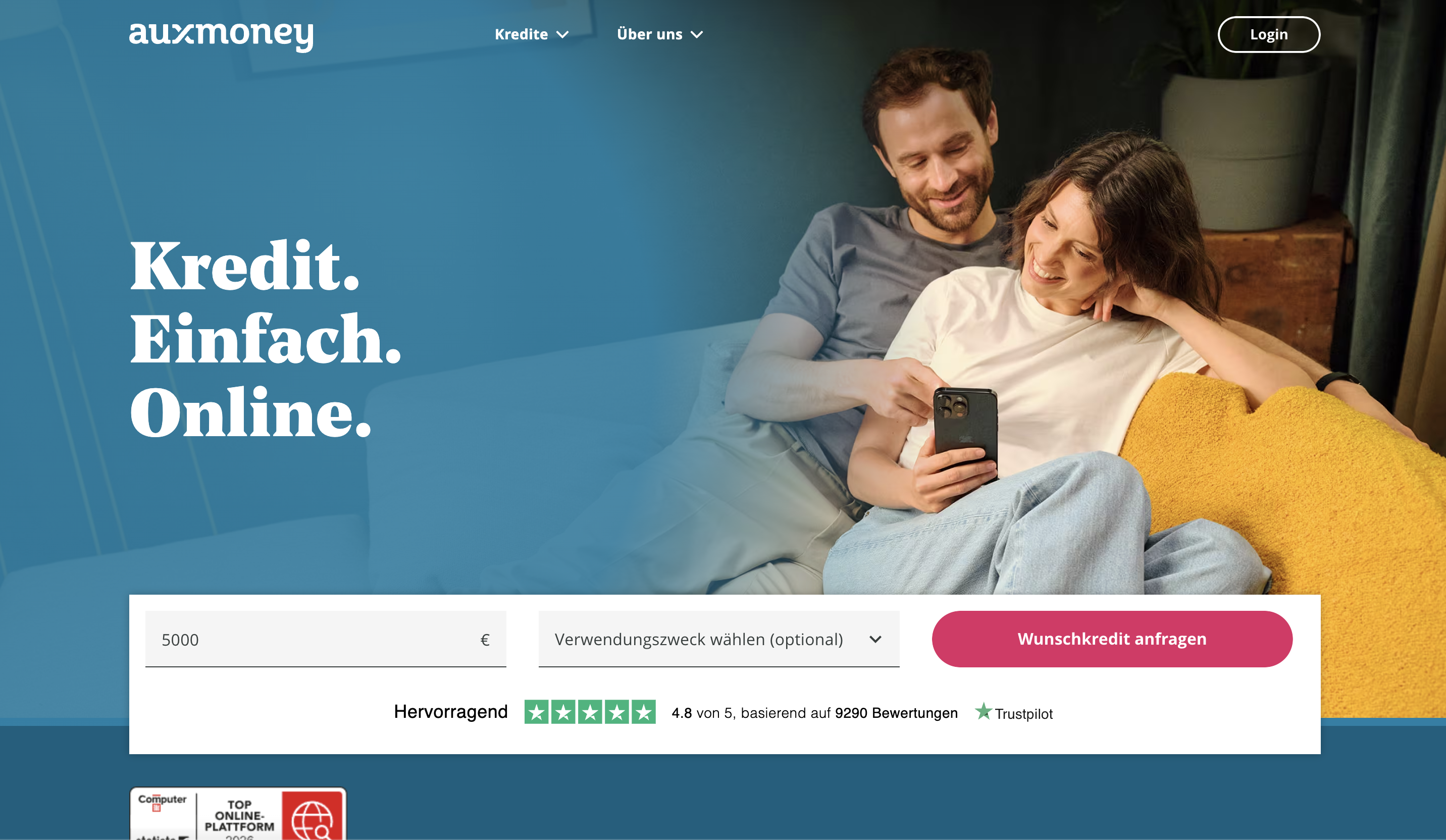
auxmoney sits at the intersection of peer-to-peer lending and digital financial inclusion. The Berlin-based platform connects individual investors with borrowers seeking personal loans, sidestepping traditional bank gatekeeping through algorithmic credit assessment and a streamlined approval process.
Since 2007, it has built one of Europe's more mature alternative lending marketplaces, processing billions in credit and establishing itself as a credible counterweight to institutional finance for everyday lending needs. What sets auxmoney apart in the crowded P2P lending space is its focus on accessibility: borrowers who might struggle with conventional bank criteria can access capital, while investors gain exposure to diversified consumer credit without the friction of direct lending management. The platform automates origination, servicing, and investor payouts, handling the operational complexity that keeps most people out of direct lending. auxmoney doesn't pretend to be a bank—it's unapologetically a marketplace, transparent about risk and returns in ways traditional lenders rarely are.
In a European fintech landscape increasingly dominated by neobanks and payment startups, auxmoney represents a quieter but steadier category: the infrastructure that lets capital find borrowers efficiently. Its longevity and scale demonstrate that P2P lending, despite early hype and inevitable casualties, has become infrastructure for people and investors outside the conventional banking circle.
Categories
Lending
0
upvotes
scalable.capital
Scalable Capital
scalable.capital🇩🇪 Germany
Scalable Capital sits at the intersection of wealth management and technology, offering algorithmic portfolio management that strips away the pretense of traditional advisory. The Berlin-based platform automates investment decisions through factor-based strategies, letting users build diversified portfolios without the six-figure minimums or quarterly check-ins that characterize private banking.
What makes Scalable different is its obsession with cost transparency. Rather than burying fees in percentages most investors never question, the platform charges a flat monthly fee regardless of account size, eliminating the perverse incentive for advisors to push larger positions. The investment thesis itself is refreshingly unsentimental: diversify broadly across global equities and bonds, rebalance automatically, and let compound interest do the work.
Scalable operates in a market crowded with robo-advisors, but it's positioned itself as the thinking person's alternative to both passive ETF apps and expensive human advisors. It's gained meaningful traction across Germany, Austria, and Switzerland, where wealth management has traditionally meant stuffy bank meetings and outdated fee structures.
The company represents a broader European fintech trend: taking institutional investment practices and making them accessible, affordable, and friction-free for ordinary people who simply want their money to work without constant hand-holding.
Categories
WealthPersonal Finance
0
upvotes
hellogetsafe.com
Getsafe
hellogetsafe.com🇩🇪 Germany
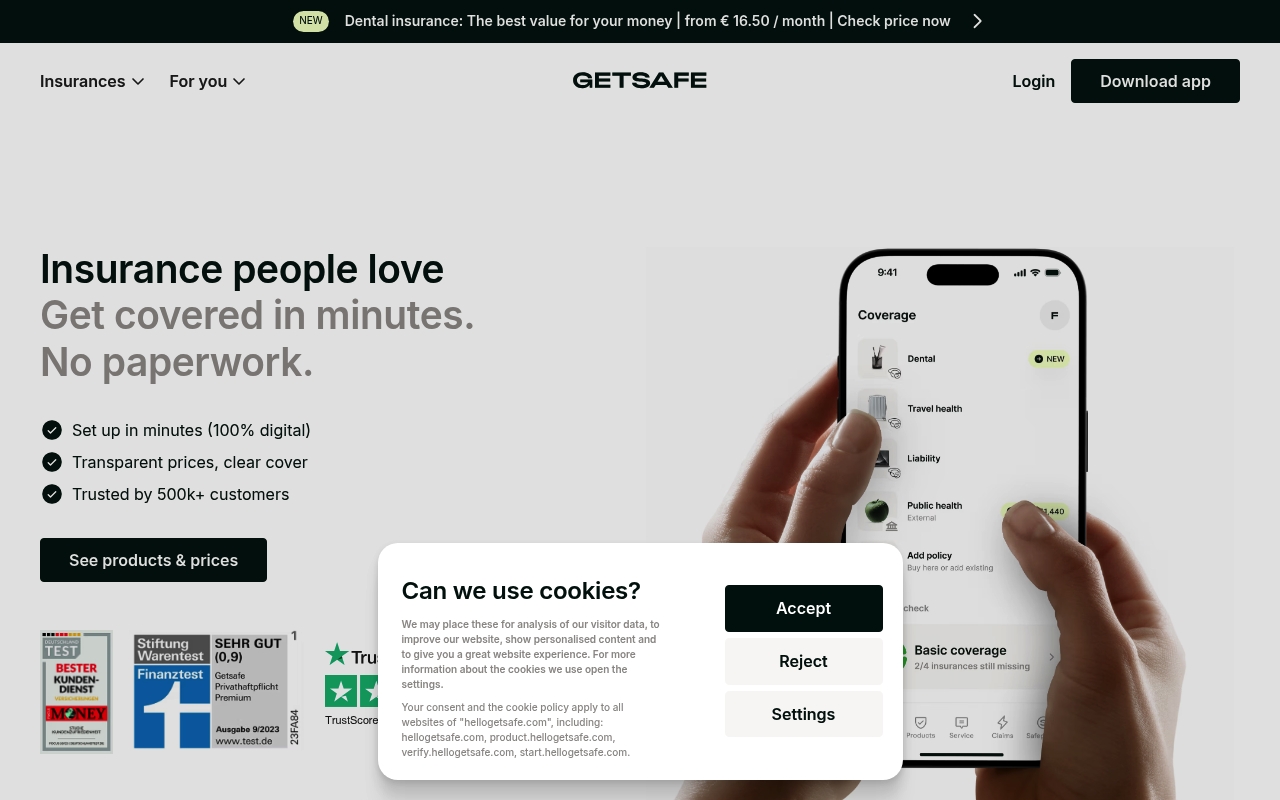
Getsafe is building insurance for the digital age, stripping away the complexity and paperwork that make traditional coverage feel like a relic. Founded on the premise that buying insurance shouldn't require a PhD in fine print, the Berlin-based insurtech has made it possible to buy, manage, and claim on policies entirely through a smartphone app. The company doesn't issue policies itself—it partners with licensed insurers—but it's reimagined every touchpoint of the experience, from onboarding (minutes, not hours) to claims (AI-powered and often resolved instantly). Where legacy insurers still operate like bureaucracies, Getsafe feels like a consumer product.
The startup has quietly built a loyal user base across Germany, France, Spain, and Austria by targeting younger, digitally-native consumers who would rather avoid call centres altogether. Its approach is deliberately inclusive: pricing is transparent, policies are customizable, and the app handles everything from renewal reminders to claims documentation in a friction-free way. Unlike traditional insurance companies that treat digital as an afterthought, Getsafe is built digital-first from the ground up. The company generates revenue through commission-based partnerships with insurers and through incremental service fees.
In a category historically dominated by incumbents and tied to physical distribution, Getsafe represents a quiet but meaningful shift toward consumer-centric insurance platforms. It's not disrupting the regulatory infrastructure of insurance, but it's successfully disrupting how people interact with it—proving that a better app can win even in one of Europe's most conservative financial sectors.
Categories
InsurTech
0
upvotes
clark.de
Clark
clark.de🇩🇪 Germany
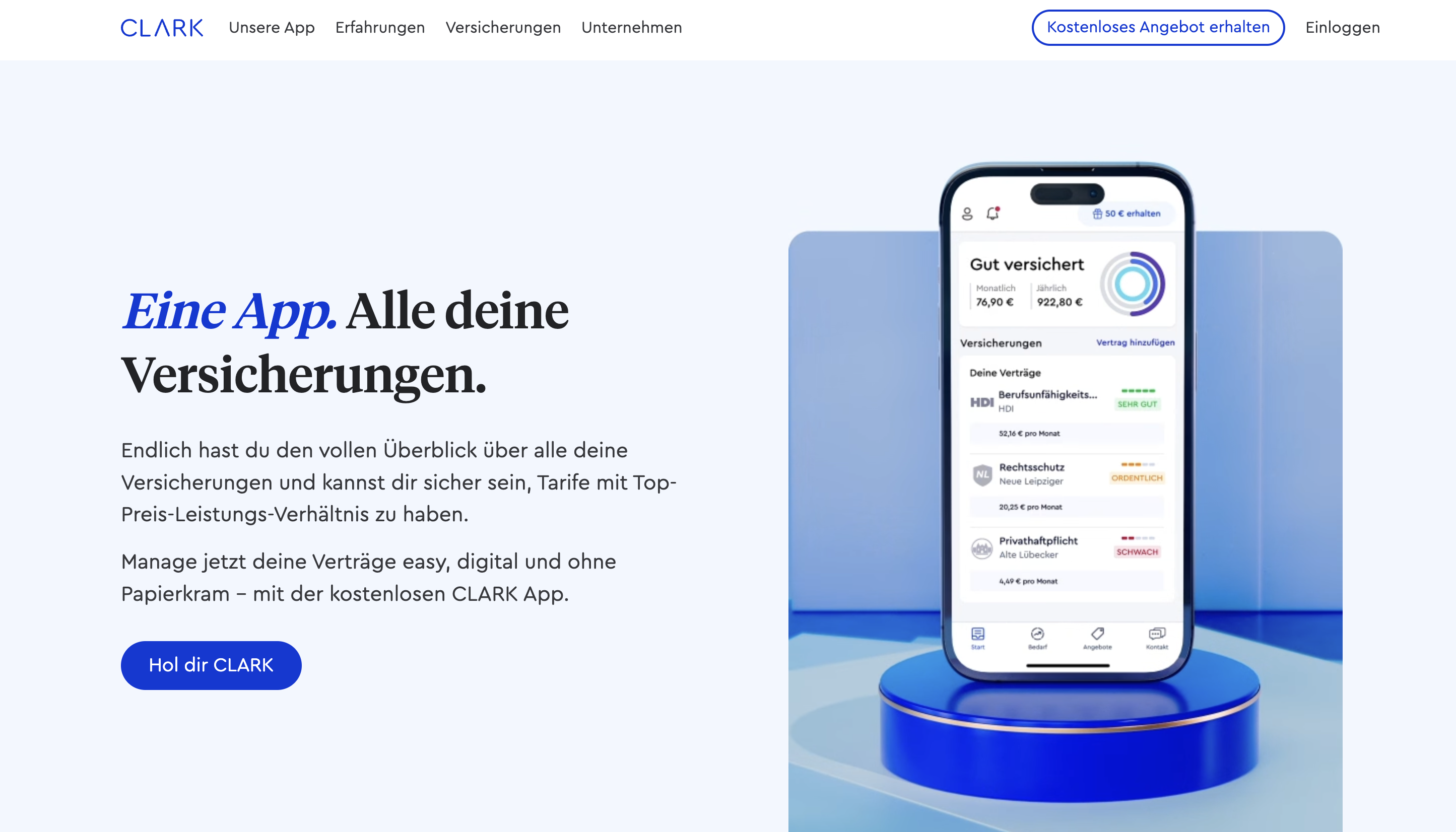
Clark is disrupting the messy business of insurance administration in Germany, Austria, and Switzerland by giving customers a single digital interface to manage all their policies—regardless of which insurer they're with. Rather than forcing people to juggle multiple providers and renewal notices, Clark aggregates everything into one place and handles the administrative grunt work: comparing coverage, finding better deals, and switching policies when it makes sense.
The app has become the go-to way for tens of thousands of Europeans to actually understand what they're paying for and stop overpaying. What sets Clark apart is that it doesn't just manage policies after you buy them—it actively renegotiates on your behalf, leveraging collective bargaining power to find cheaper rates across competitors. You authorize the switch, Clark handles the paperwork. Most insurance platforms either sell you products or help you compare; Clark does neither. Instead, it sits between you and the entire market, keeping your interests first and taking a commission only when it saves you money. The company has essentially made insurance administration feel like it's from the 2020s rather than the 1990s. For millions of Europeans stuck with scattered policies, outdated coverage, and premium shock every renewal cycle, Clark has become infrastructure.
Categories
InsurTech
0
upvotes
solarisgroup.com
Solaris
solarisgroup.com🇩🇪 Germany
Solaris is a Berlin-based fintech infrastructure platform that lets financial institutions and fintechs launch their own digital banking products without building tech from scratch. Rather than wrestling with legacy core banking systems, clients plug into Solaris's cloud-native API layer to issue cards, manage accounts, and process payments at speed.
The company operates in the shadows of most consumer apps—you won't see the Solaris logo in an app store—but its backbone runs through dozens of European fintechs, neobanks, and traditional financial institutions. Think of it as the plumbing that powers other people's banking ambitions.
Solaris dominates a specific niche: the BaaS (Banking-as-a-Service) and embedded finance layer for Europe. While competitors like Thought Machine and Temenos chase enterprise banking overhauls, Solaris stays focused on the modern fintech workflow. Its modular design appeals to companies that need speed and flexibility, not a 10-year implementation project.
In a market crowded with infrastructure plays, Solaris has become essential plumbing for European digital banking. It sits at the intersection of regulatory compliance, technical simplicity, and startup ambition—precisely where the next wave of European fintech is being built.
Categories
Financial InfrastructureDigital BankingPayments
0
upvotes
mambu.com
Mambu
mambu.com🇩🇪 Germany
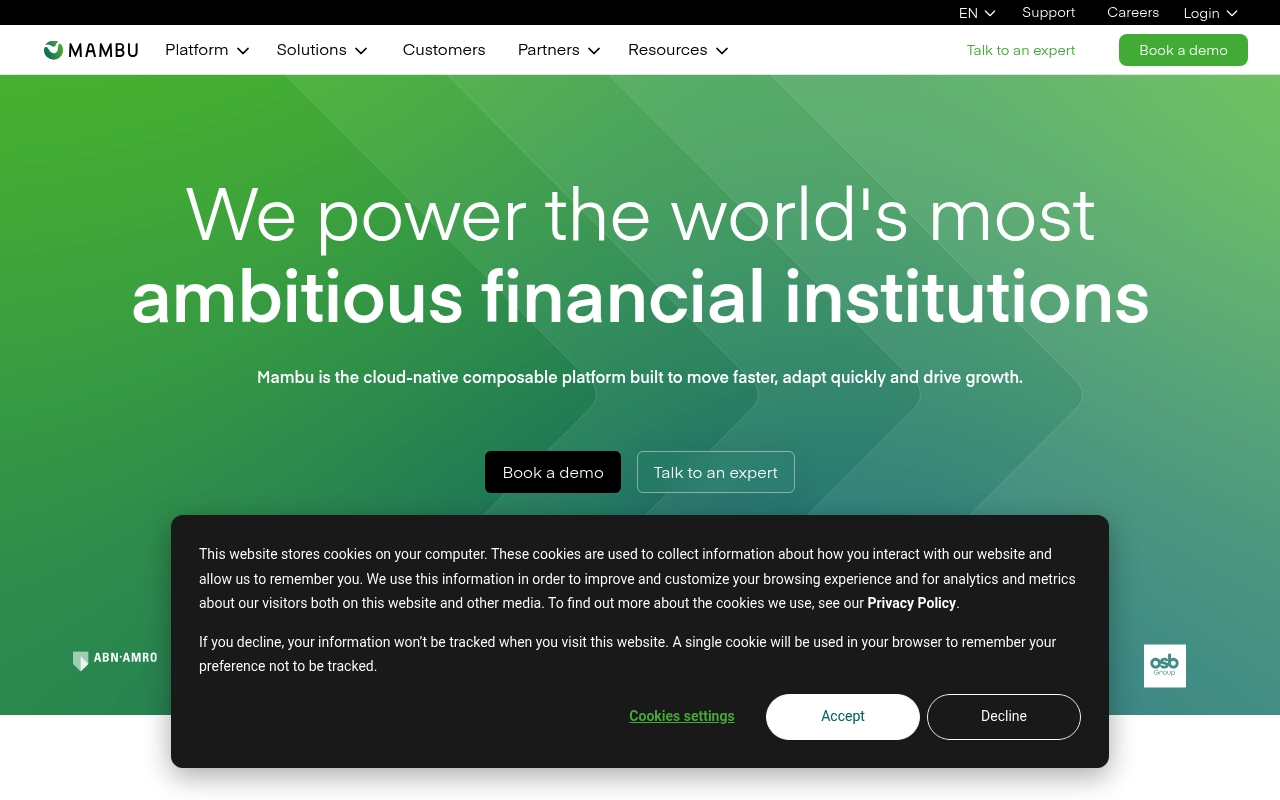
Mambu is a cloud-native banking software platform that lets financial institutions and fintechs launch and operate lending and deposit products without building from scratch. Rather than forcing customers into rigid legacy systems, Mambu provides composable banking infrastructure—modular APIs and pre-built components that work together or stand alone, depending on what you actually need.
The company sits at the intersection of two fintech realities: traditional banks are drowning in outdated core systems that can't keep pace with market demands, while new lenders and neobanks need speed without sacrificing compliance or scale. Mambu's approach is to be the operating system underneath, handling the heavy lifting of loan origination, deposit management, portfolio servicing, and regulatory reporting while letting clients focus on customer experience and product innovation.
What makes Mambu different from other core banking platforms is its emphasis on velocity. Institutions deploy in weeks rather than years. The platform is genuinely modular—you can pick the lending module, the deposit module, or both, and layer in third-party services through APIs. This flexibility has resonated with everyone from African microfinance networks to European challenger banks to enterprise lenders managing complex credit products.
Mambu is now a critical piece of infrastructure in the emerging markets fintech ecosystem, particularly across Africa and Asia, where it powers lending operations for hundreds of financial institutions. In Europe, it's carved out space among mid-market and challenger banks looking to avoid the capital expenditure and technical debt of legacy systems. The company represents a broader shift in fintech: away from end-to-end platforms that claim to do everything, toward specialized infrastructure that does one thing—backend financial operations—exceptionally well.
Categories
LendingDigital BankingFinancial Infrastructure
0
upvotes