Partasio
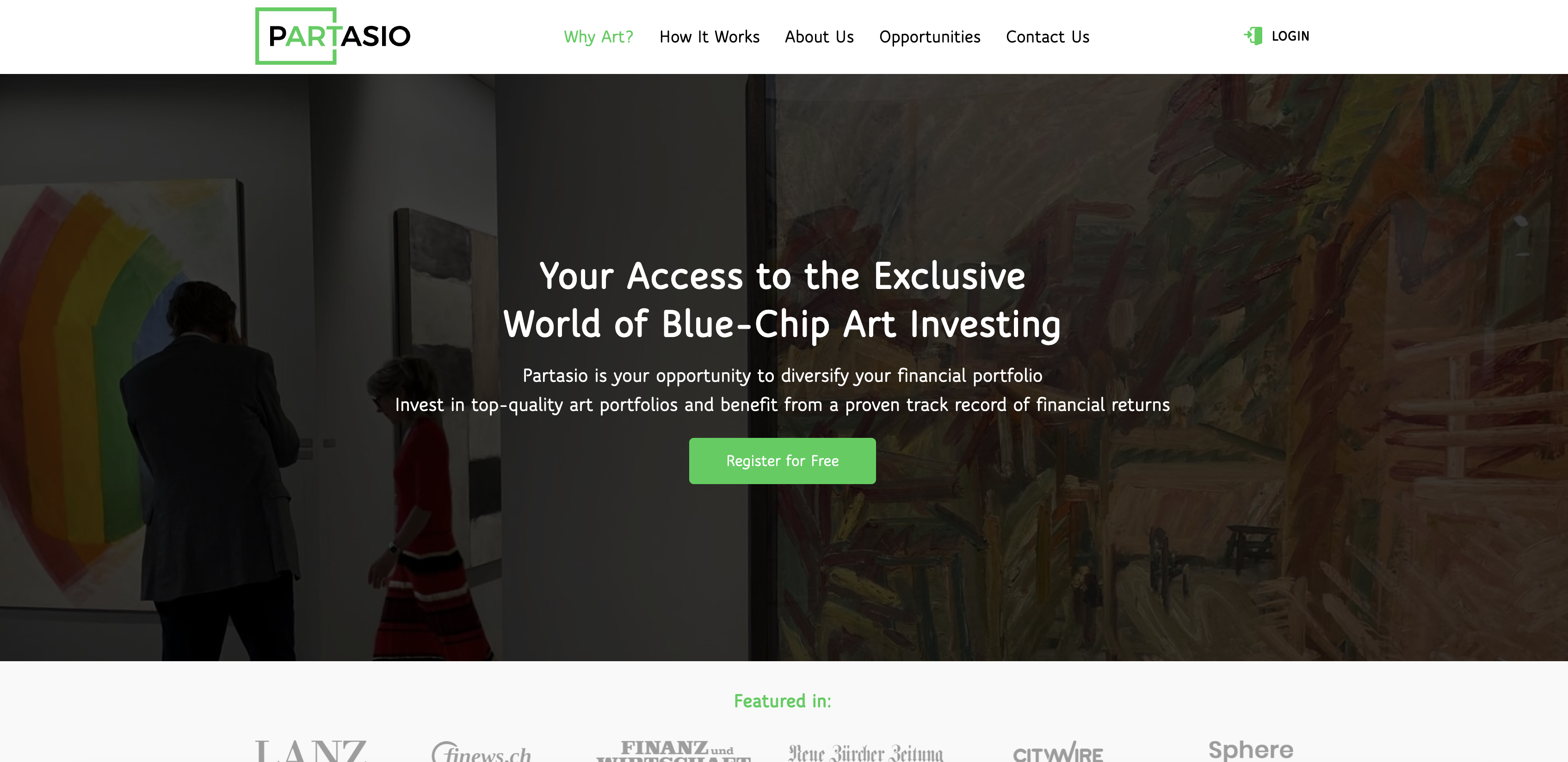
Most people think of art as something you hang on a wall, not something you add to a portfolio. That’s exactly the gap Partasio is trying to close.
Based in Switzerland, Partasio sits at the intersection of finance and culture, turning blue-chip art into a structured investment product. Instead of buying a single painting for millions, investors can access curated portfolios of museum-grade works—fractionalized, packaged, and managed like a financial asset.
At its core, the model is simple but powerful. Partasio builds portfolios of 4–6 high-end artworks from globally established artists, typically sourced off-market through private networks. Each portfolio is placed into a single-purpose vehicle, and investors buy into it through bankable certificates—complete with a Swiss ISIN—making it look and behave more like a traditional financial instrument than an art purchase.
The pitch isn’t just about access—it’s about diversification. Blue-chip art has historically shown low correlation with traditional asset classes like equities or real estate, making it attractive for investors looking to balance risk. But until recently, that market was largely reserved for ultra-wealthy collectors. Partasio lowers that barrier, with minimum investments starting around CHF 30,000.
What makes the platform stand out is how it blends private equity logic with the art world. Portfolios are actively managed over a multi-year horizon, with returns realized when the artworks are sold—typically within three to seven years. The company’s incentives are aligned with investors, earning performance fees only when profits are generated.
It’s part of a broader shift in fintech toward alternative assets—where everything from real estate to art is becoming more accessible, structured, and digital. But Partasio leans into something slightly different. It doesn’t try to reinvent art. It simply builds a financial layer around it.
In a market that’s historically opaque and exclusive, that alone is enough to make it stand out.