Country
Companies5 of 5
rampnetwork.com
Ramp
rampnetwork.com🇵🇱 Poland
Ramp is rewriting how companies spend money. Built for finance teams tired of spreadsheets and manual processes, it combines a corporate card, expense management, and accounting integrations into a single platform that actually talks to the software finance teams already use. Most corporate card programs feel like they were designed in 1995. Ramp feels like software built this decade—mobile-first, API-forward, and deeply integrated with tools like NetSuite and QuickBooks. The company started by solving a real problem: CFOs and controllers wasting hours reconciling card statements and expense reports. Instead of patching that broken workflow, Ramp replaced it entirely. You get a card, real-time spending controls, automated categorization, and instant syncing to your accounting system. No more manual entries, no more approval bottlenecks, no more spreadsheet chaos. The platform goes deeper than most competitors by combining physical and virtual cards with embedded controls—spend limits by department, merchant category, or individual employee. Finance teams can actually enforce policy in real time rather than auditing violations weeks later. Ramp operates in a crowded space, but it's differentiated by speed and simplicity. Where competitors try to be everything to everyone, Ramp has kept focus on what CFOs actually care about: reducing manual work, improving visibility, and cutting unnecessary spending. Its integration-first approach means it's not trying to replace your entire finance stack—it's designed to slot in and make your existing tools work harder. For mid-market companies tired of manual expense management and lacking the complexity of enterprise-grade solutions, Ramp has become the obvious choice. It's also been ruthless about profitability, reaching positive unit economics early, which matters in a category where many competitors burned through billions before proving their model worked.
Categories
SME FinancePaymentsFinancial Infrastructure
0
upvotes
inxy.io
Inxy
inxy.io🇵🇱 Poland
Inxy is a European open banking platform that lets businesses tap into customer financial data through APIs, turning fragmented banking relationships into a single source of truth. Rather than asking customers to manually upload statements or reconnect accounts every few months, Inxy maintains a live, permission-based link to real bank data—making it effortless for fintechs, lenders, and SaaS platforms to build smarter underwriting, risk assessment, and financial insights on top of their core products. The platform sits squarely in the infrastructure layer, designed for teams building financial experiences rather than consumers managing their own money. What sets Inxy apart in a crowded open banking space is its focus on simplicity and reliability. While competitors often require technical gymnastics or lengthy integrations, Inxy's API is direct and frictionless. It handles the complexity of PSD2 compliance, account connectivity, and data standardization behind the scenes. The result: lenders can make faster, more informed decisions; embedded finance platforms can offer instant credit lines; accounting tools can automatically reconcile transactions. Inxy is fundamentally changing how financial data moves between banks and the applications that need it most, making it an essential building block for modern European fintech.
Categories
Open BankingFinancial Infrastructure
0
upvotes
idnow.io
IDnow
idnow.io🇵🇱 Poland
IDnow is a Berlin-based identity verification platform that has become Europe's go-to infrastructure for digital onboarding at scale. The company combines biometric technology, document verification, and liveness detection to let banks, fintechs, and marketplaces prove you are who you say you are—without the friction of branch visits or endless paperwork. Unlike legacy identity providers that treat verification as a checkbox, IDnow positions it as a conversion tool: faster onboarding means more customers, fewer drop-offs, and regulatory peace of mind all at once. The platform has processed hundreds of millions of identity checks across the continent, becoming embedded in critical moments where trust and speed collide—opening an account, accessing credit, or completing a payment. What sets IDnow apart is its European focus and regulatory fluency. The company navigates AML, KYC, and GDPR requirements across multiple jurisdictions, giving it credibility with both heavily regulated institutions and scrappy challengers who need compliance without the compliance bureaucracy. IDnow sits at the intersection of user experience and regulatory necessity, solving a problem that never gets easier: proving identity at digital speed while satisfying authorities who demand certainty. In an ecosystem where onboarding abandonment rates are still absurdly high, IDnow has become the infrastructure layer that makes frictionless verification actually possible.
Categories
Identity & KYCDigital BankingRegTech
0
upvotes
bidfinance.eu
Bid Finance
bidfinance.eu🇵🇱 Poland
Bid Finance is a European platform that streamlines how small and mid-sized businesses access working capital finance. Rather than the traditional dance of chasing multiple lenders and dealing with weeks of paperwork, the platform lets SMEs connect with a curated network of funding providers—banks, alternative lenders, and institutional investors—through a single application. The process is built around speed and transparency: once a business posts its financing need, multiple lenders can compete for the deal, which typically means better terms and faster decisions.
What sets Bid Finance apart is its marketplace model. Instead of being another loan originator or broker that simply refers you somewhere else, it facilitates genuine competition between funders. SMEs see real-time offers and can compare pricing and terms side by side. It's the B2B equivalent of price transparency in consumer finance, but applied to the murky world of business lending where information asymmetry has long been the norm.
The platform operates across multiple European markets, positioning itself as a pan-European solution for working capital, invoice financing, and asset-based lending. It targets businesses that don't fit neatly into the big bank's playbooks—growing firms that need flexible, responsive funding without the bureaucracy. For lenders, it reduces sourcing costs and lets them plug into deal flow they'd otherwise struggle to access.
Bid Finance represents a broader shift in how European SMEs access capital: moving away from relationship banking and towards digital-first, competitive marketplaces where multiple parties bid on deals in near real-time.
Categories
LendingSME Finance
0
upvotes
scanye.pl
Scanye
scanye.pl🇵🇱 Poland
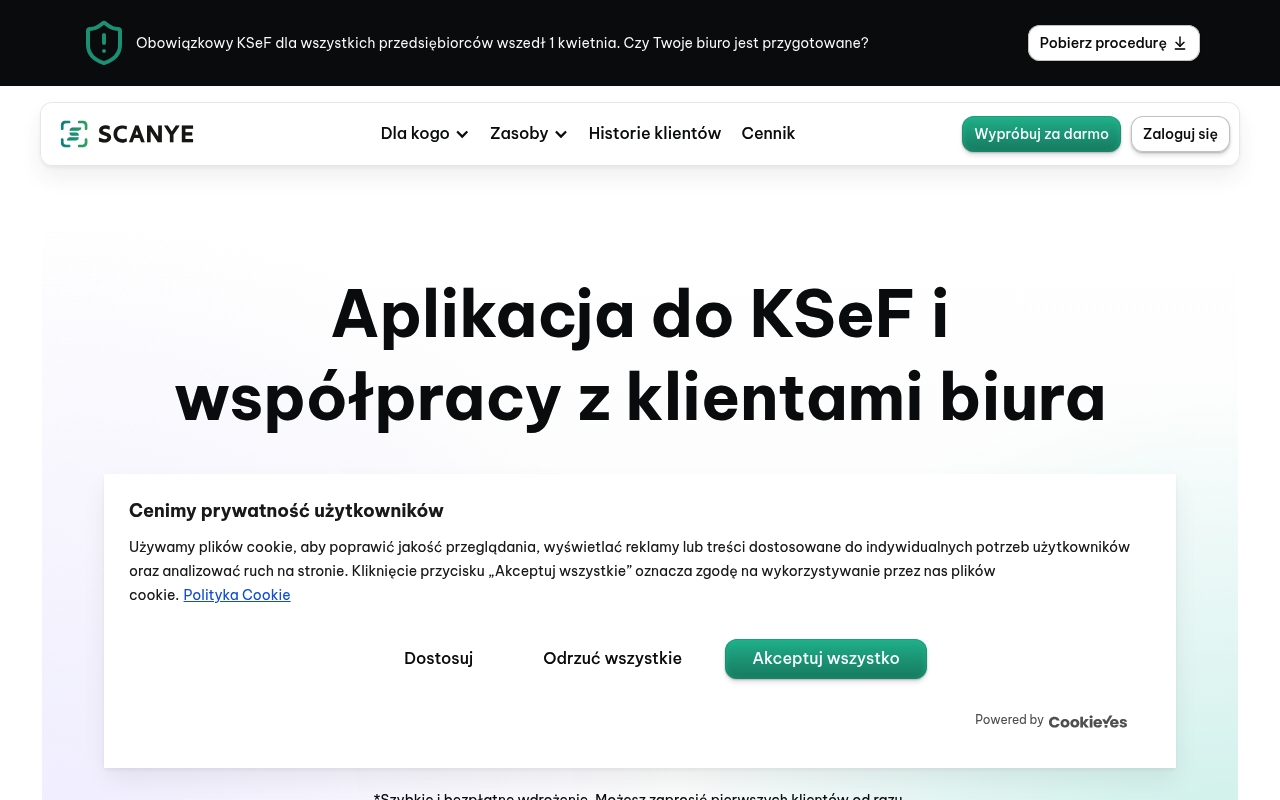
Scanye is a Polish fintech company that makes document verification and identity management accessible to European businesses. Instead of piecing together fragmented KYC solutions, companies get a unified platform that scans documents, verifies identities, and handles compliance in one place. The platform combines optical character recognition with AI-powered document analysis to catch forgeries and mismatches in real time, cutting the friction out of onboarding without the headaches of legacy compliance workflows.
What sets Scanye apart in a crowded identity verification market is its focus on simplicity. While competitors layer complexity with API integrations and compliance jargon, Scanye abstracts away the technical noise. Banks, fintechs, and e-commerce platforms in Poland and neighboring markets use it to streamline customer verification without building custom solutions. The company operates at the intersection of friction reduction and regulatory necessity—solving the problem that most businesses grudgingly accept rather than one they're excited to tackle.
Scanya sits squarely in the identity and KYC infrastructure layer that European fintechs depend on but rarely celebrate. It's become part of the plumbing that makes digital onboarding actually work, handling the verification step that determines whether a customer gets through the door or bounces away frustrated. For a region still maturing its fintech stack, that positioning is both practical and strategically sound.
Categories
Identity & KYC
0
upvotes